Ring Main Unit Explained: When to Use RMU in MV Projects
Ring Main Unit Explained: When to Use RMU in MV Projects
Quick Facts for Procurement Managers
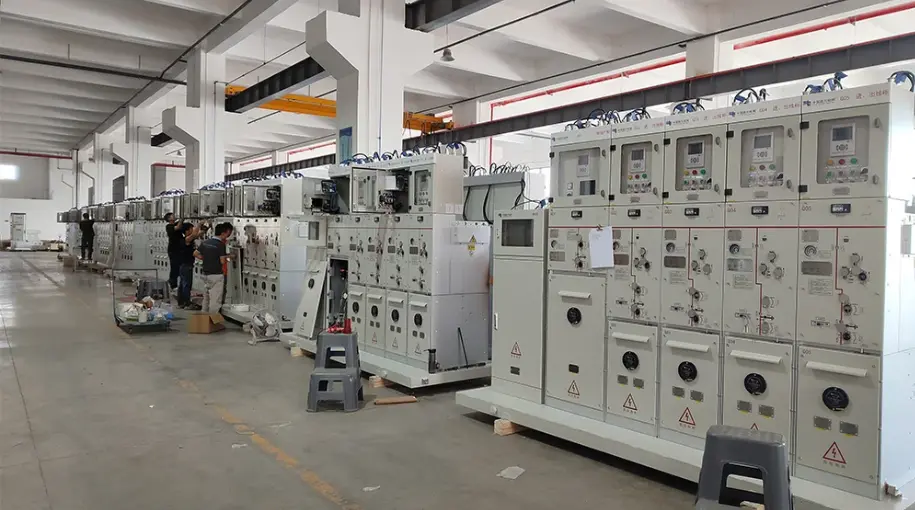
How an RMU Works: Ring Configuration & Operational Principle
In a ring distribution, feeders loop from substation to substation. An RMU’s role is to provide sectionalizing points in the loop so that a fault on one feeder can be isolated while maintaining supply from the alternate path. The switching sequence, protection coordination and clear isolation ensure safety for maintenance and swift restoration.
Operational Scenarios
- Fault isolation: automatic or manual switching to isolate a faulted section.
- Planned maintenance: enable maintenance on one feeder without cutting supply to customers.
- Reconfiguration: re-route supply paths in network reconfiguration or outage recovery.
RMU vs Other Medium-Voltage Solutions — Buyer’s Decision Matrix
Below is a simplified comparison to help procurement choose the right architecture.
| Criteria | RMU | Conventional MV Switchgear | GIS |
|---|---|---|---|
| Footprint | Very compact | Medium-large | Compact but costly |
| Installation speed | Fast (factory-assembled) | Moderate | Moderate |
| Upfront cost | Moderate | Lower (depending on config) | High |
| Maintenance | Low-moderate | Moderate | Low (but specialized) |
| Best use case | Urban/compact/loop networks | Substations, bespoke layouts | Space-constrained, high reliability |
Recommendation: Use RMU when space, fast restoration and modular feeder connections are priorities. Use conventional switchgear for flexible layouts and heavy customization. Use GIS where space and extreme environmental sealing are required, if budget allows.
When to Use an RMU — Common Use Cases
- Urban distribution / underground networks: minimal footprint and safe enclosure.
- Industrial plants: critical feeders where fast isolation reduces downtime.
- Renewable sites (solar/wind): compact secondary distribution and feeder protection.
- Secondary substations / utility ring networks: where redundancy is required with limited space.
Testing, FAT & Standards — What to Require
For procurement assurance, mandate the following standards and tests in the contract. Link to authoritative resources where feasible.
Recommended standards
- IEC 62271 series (applicable MV switchgear standards)
- Local grid codes and utility specifications (always check project country requirements)
Essential tests to include in RFQ / contract
- Type tests: dielectric, temperature rise, short-circuit withstand (performed on type)
- Routine tests: insulation resistance, mechanical operation, secondary circuit tests
- FAT: witnessable Factory Acceptance Test with full protection & interlock verification
- Third-party verification: optional but recommended for critical projects
Buyer action: specify FAT witness scope, acceptance criteria, and deliverable FAT report templates in the purchase order.
Case Study — Example: Urban Secondary Substation (Illustrative)
Project: 11 kV secondary substation for urban distribution (City X)
Scope: 4-way RMU with vacuum breakers, IP54 enclosure, rated 20 kA short-circuit withstand.
Outcome: Reduced restoration time from 3 hours to under 45 minutes during feeder faults; 2% reduction in annual outage minutes. Delivery on schedule (8 weeks) including FAT.
Buyer tip: include measurable KPIs in contracts (e.g., restoration time SLA, acceptance tests) to hold vendor accountable.
Frequently Asked Questions (FAQ)
What is the typical lifespan of an RMU?
With proper maintenance, RMUs typically last 25+ years. Life expectancy depends on environment, switching duty and maintenance rigor.
Are SF6-insulated RMUs still acceptable?
SF6 RMUs are common due to compactness; however SF6 is a potent greenhouse gas. Many buyers now request SF6-minimized designs or SF6-free alternatives. Check local environmental regulations.
How long is the lead time for a standard 11 kV RMU?
Typical standard lead time is 6–12 weeks. Customizations, higher fault ratings or special environmental coatings may extend lead time.
What FAT tests should I witness?
Witness dielectric tests, mechanical operations, protection relay tests and short-circuit verification where applicable. Require a full FAT report as deliverable.
Contact / Request Quote
Ready to specify an RMU for your project? Contact our sales team with your project details (voltage, feeders, fault level, site conditions) or use the RFQ checklist link above.
YOU MAY LIKE
RELATED BLOGS